Many Singapore learners assume that joining a group Korean class or downloading a language app is the fastest route to fluency. It rarely is. The real bottleneck is not vocabulary or grammar rules — it is the lack of consistent, personalized speaking practice with someone who can correct you in real time. Private Korean tutoring solves exactly that. Whether you are a student preparing for TOPIK, a professional who needs business Korean, or simply someone who wants to hold a real conversation, this guide breaks down what private tutoring actually involves, why it works, how the best tutors teach, and how to pick the right one for your goals in Singapore.
Table of Contents
- What defines private Korean tutoring?
- Benefits of private Korean tutoring for Singapore learners
- Teaching methodologies: From Hangul to advanced communication
- How to choose the right private Korean tutor
- What most articles miss about private Korean tutoring
- Discover personalized Korean tutoring options in Singapore
- Frequently asked questions
Key Takeaways
| Point | Details |
|---|---|
| Personalized progression | Private Korean tutoring lets you learn at your own pace with a curriculum tailored to your needs. |
| Real-world fluency | Native-speaking tutors help you gain confidence in everyday conversation and practical language use. |
| Higher motivation | Regular sessions and a dedicated tutor reduce dropout rates and keep you accountable. |
| Effective methodologies | Lessons progress from Hangul basics to advanced communication using structured CEFR levels. |
What defines private Korean tutoring?
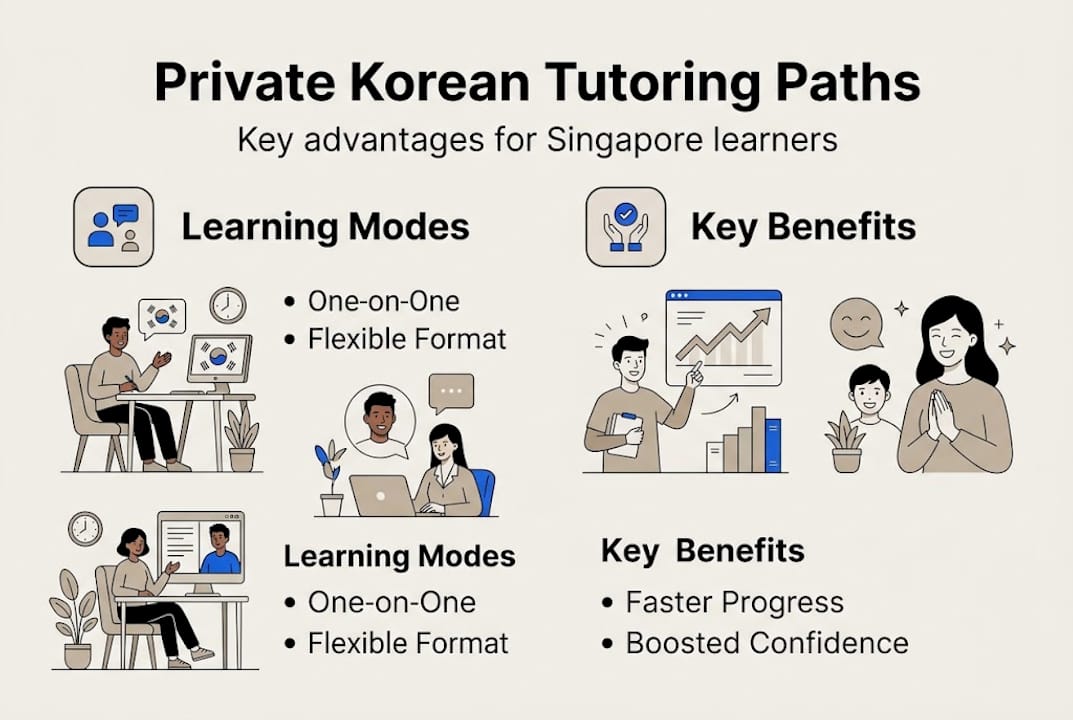
Private Korean tutoring means one-on-one lessons between a learner and a qualified tutor, typically a native Korean speaker. There is no fixed class size, no waiting for slower learners to catch up, and no pressure to keep pace with faster ones. Every session is built around you.
The core features that separate private tutoring from other formats include:
- Personalized pacing: You move through material at your own speed, spending more time on weak areas like pronunciation or grammar without holding back your overall progress.
- Customized curriculum: A good tutor designs lessons around your specific goals, whether that is passing TOPIK, preparing for a job interview at a Korean company, or simply chatting confidently with Korean friends.
- Constant, immediate feedback: Mistakes are corrected as they happen, not after a test. This speeds up habit formation and prevents bad patterns from becoming permanent.
- Flexible scheduling: Sessions can be arranged around work hours, school timetables, or travel, which is a major advantage for Singapore’s busy students and professionals.
Contrast this with group classes, where a typical class holds 8 to 15 students. As noted in a structured Korean learning guide, methodologies in group settings follow CEFR levels from A1 to C2, covering Hangul basics through to advanced debate, but private tutoring allows truly personalized pacing that group formats simply cannot match.
Self-study, on the other hand, offers flexibility but almost no accountability. Without someone to answer to, dropout rates climb quickly. The difference between group vs private Korean classes comes down to one thing: how much of each session is actually spent speaking and receiving feedback.
“The biggest misconception is that a larger class means more exposure to the language. In reality, more students means less speaking time per person — and speaking time is where fluency is actually built.”
If you want to explore what structured private Korean classes look like in practice, the format is far more flexible and outcome-focused than most learners expect.
Benefits of private Korean tutoring for Singapore learners
Singapore learners come to Korean tutoring with very different goals. Students want exam results and conversational confidence. Professionals need workplace language, business etiquette, and the ability to negotiate or present in Korean. Private tutoring serves both groups in ways group classes cannot.
The most significant benefit is fluency through communicative focus. A communicative focus with native tutors yields real-world fluency, and committing to regular private sessions directly counters the high dropout rates common in self-study. When you have a scheduled session and a tutor waiting, you show up.
Here is a comparison of how private tutoring stacks up against common alternatives:
| Feature | Private tutoring | Group class | Self-study |
|---|---|---|---|
| Speaking time per session | High | Low | None |
| Feedback speed | Immediate | Delayed | None |
| Curriculum flexibility | Fully customized | Fixed | Fully flexible |
| Accountability | High | Medium | Very low |
| TOPIK exam preparation | Targeted | General | Self-directed |
| Cost | Higher | Lower | Minimal |
For students, private tutoring accelerates TOPIK preparation because the tutor can focus specifically on the sections where you lose marks. For professionals, the private tutoring benefits extend into business vocabulary, formal speech levels, and even cultural context that affects how you come across in Korean workplace settings.
Motivation is another underrated factor. When a tutor knows your name, your goals, and your weak points, sessions feel purposeful rather than generic. That personal investment keeps learners going through the difficult intermediate plateau, which is where most group class students quietly give up.
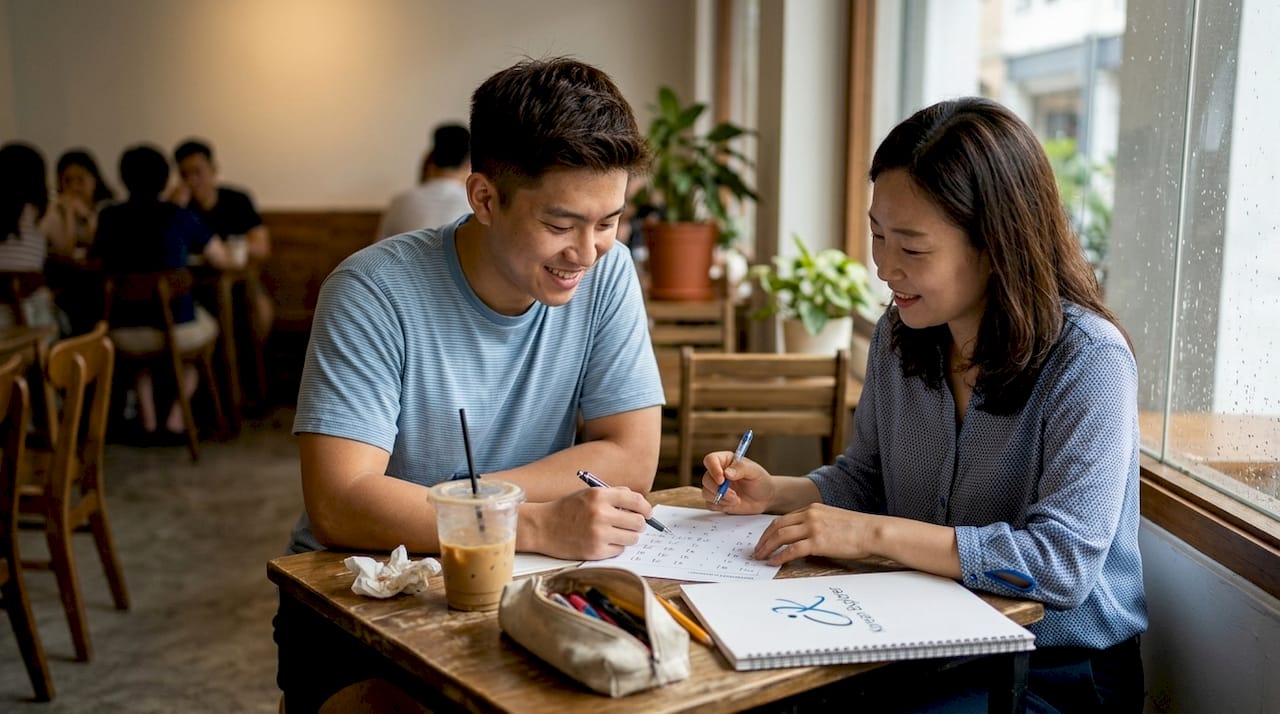
Pro Tip: If you are a working professional, tell your tutor upfront about your industry. A tutor who knows you work in finance or logistics can build vocabulary sets and role-play scenarios that are directly useful at work, cutting your learning curve significantly. You can also join a Korean class to supplement your private sessions with peer interaction once you have a solid foundation.
Teaching methodologies: From Hangul to advanced communication
Private Korean tutoring follows a logical sequence, but the pace and depth at each stage depend entirely on the learner. Here is how a well-structured private tutoring journey typically unfolds:
- Hangul mastery: Before anything else, you learn to read and write the Korean alphabet. Most learners can achieve basic Hangul literacy in one to two weeks with daily practice.
- Basic grammar and vocabulary: Common sentence structures, verb conjugation, and everyday vocabulary form the foundation. Tutors use real-life scenarios to make this immediately applicable.
- Conversational practice: Role-play, guided dialogues, and situational exercises build speaking confidence. This stage introduces informal speech and common slang.
- Intermediate grammar and listening: More complex grammar patterns, listening comprehension, and reading practice prepare learners for the CEFR B1 and B2 levels.
- Advanced communication: Business Korean, formal speech levels, debate topics, and nuanced cultural context round out the upper levels.
The CEFR-structured methodology from A1 through C2 gives both tutor and learner clear milestones. Private tutoring adapts these milestones to your actual progress rather than a fixed calendar.
| CEFR level | Focus area | Typical private tutoring tools |
|---|---|---|
| A1 to A2 | Hangul, greetings, basic grammar | Flashcards, audio, simple role-play |
| B1 to B2 | Conversation, reading, listening | Dialogues, podcasts, news articles |
| C1 to C2 | Business Korean, debate, nuance | Case studies, presentations, debate |
Tutors who use effective Korean teaching methodologies know that passive learning like reading textbooks alone does not build speaking confidence. The best sessions are interactive, with the tutor pushing you to produce language rather than just absorb it.
For those just starting out, beginner Korean lessons focus heavily on pronunciation and script recognition before moving to grammar. Once you reach the middle stages, an intermediate Korean course structure helps bridge the gap between basic conversation and real-world fluency.
How to choose the right private Korean tutor
Choosing a tutor is not just about finding someone who speaks Korean. It is about finding someone who can teach it well and connect with your specific learning style.
Here is what to look for:
- Native speaker status: A tutor who grew up speaking Korean brings natural pronunciation, cultural context, and authentic slang that non-native tutors often miss.
- Teaching credentials: Look for tutors with formal language teaching qualifications or significant structured teaching experience, not just fluency.
- Methodology match: Ask how they structure lessons. If you want conversational fluency, a tutor who relies heavily on grammar drills is not the right fit.
- Goal alignment: Be specific about your objectives. TOPIK preparation, business Korean, and casual conversation require different approaches.
- Trial lessons: Always request a trial session before committing. Use it to assess communication style, lesson structure, and how comfortable you feel speaking.
- Feedback quality: A good tutor does not just correct errors. They explain why something is wrong and give you a better alternative to practice.
The communicative focus from native tutors is what separates effective tutoring from expensive conversation practice. Committing to regular sessions with the right tutor is the single most reliable path to fluency.
One common mistake Singapore learners make is choosing a tutor based on price alone. A cheaper tutor with no structured approach can actually slow your progress by reinforcing bad habits. Another mistake is not setting clear objectives before the first session. Without a goal, lessons drift.
Pro Tip: Before your first session, write down three specific things you want to be able to do in Korean within three months. Share this list with your tutor. It gives them a target and keeps both of you accountable. Explore options for personalized Korean learning to find a format that matches your schedule and goals. You can also compare providers when you learn Korean in Singapore to find the right fit.
What most articles miss about private Korean tutoring
Most guides focus on curriculum, materials, and study schedules. Those things matter, but they are not what actually moves the needle. The real difference-maker is regular, structured conversation with a native speaker who holds you accountable.
Singapore learners in particular tend to over-invest in finding the perfect textbook or app while under-investing in actual speaking time. Fluency is not built by reading about grammar. It is built by using the language, making mistakes, and getting corrected in real time. That process requires a person, not a platform.
The communicative focus with native tutors is what bridges the gap between knowing Korean and using it confidently at work or in daily life. Commitment to regular sessions beats any single resource.
Private tutoring also builds something that no app can replicate: confidence. When you know a native speaker has corrected your pronunciation, validated your sentence structure, and pushed you through difficult conversations, you walk into real-world Korean interactions ready. That readiness is what personalized Korean learning is ultimately about.
Discover personalized Korean tutoring options in Singapore
If you are ready to move beyond group classes and self-study, Korean Explorer offers structured, flexible options designed for Singapore learners at every level.
From beginner to advanced, the school’s Korean language courses follow a Seoul National University curriculum aligned with TOPIK standards, taught by experienced native instructors. If one-on-one learning fits your goals, private Korean classes offer fully customized sessions around your schedule and objectives. Not sure which format suits you? The class options comparison page helps you weigh group and private formats side by side so you can make an informed choice.
Frequently asked questions
What is private Korean tutoring and how does it differ from group classes?
Private Korean tutoring means one-on-one lessons where the tutor customizes pacing, feedback, and content entirely for you, unlike group classes where 8 to 15 students share a fixed schedule and speaking time is limited.
How can private Korean tutoring help professionals in Singapore?
Tutoring can be focused on business vocabulary, formal speech levels, and workplace role-play scenarios, giving professionals real-world fluency that directly applies to their career needs.
What curriculum frameworks do private Korean tutors use in Singapore?
Most qualified tutors follow CEFR levels A1 to C2, progressing from Hangul basics through to advanced conversation and debate, with the pace adjusted to each learner.
How do I choose the right private Korean tutor?
Prioritize native speakers with formal teaching credentials, ask about their lesson structure during a trial session, and set clear goals upfront so your tutor can build a plan that fits your specific needs.