TL;DR:
- Certified Korean tutors use structured curricula and provide real-time feedback to enhance fluency.
- Qualifications include formal teaching certification and alignment with recognized standards like TOPIK.
- Personalized instruction helps learners achieve specific goals faster, with measurable progress through assessments.
Many learners assume that apps, YouTube videos, and casual conversation exchanges are enough to reach real Korean proficiency. That assumption costs them months of wasted effort. Language-specific structured programs with consistent feedback show measurably superior fluency outcomes compared to informal methods. Whether you are a student preparing for TOPIK, a professional expanding into Korean markets, or someone who simply wants to hold a real conversation, the quality of your instruction matters far more than the hours you log. This article breaks down exactly why certified Korean tutors are worth seeking out, what credentials to look for, and how to measure whether your learning is actually working.
Table of Contents
- Why certified tutors are key for Korean proficiency
- Certification standards for Korean tutors in Singapore
- How certified tutors personalize learning for different goals
- Measuring success: Outcomes of certified Korean tutoring
- What most learners miss: Structured feedback is the real game-changer
- Next steps: Find your certified Korean tutor in Singapore
- Frequently asked questions
Key Takeaways
| Point | Details |
|---|---|
| Structured programs boost fluency | Certified tutors using structured language programs measurably outperform informal methods for Korean proficiency. |
| Certification ensures quality | Tutor credential verification is crucial for ensuring high teaching standards and results. |
| Personalized approach matters | Certified tutors tailor their instruction for individual learning goals, maximizing academic, business, or personal advancement. |
| Continuous feedback drives progress | Regular tutor feedback corrects errors and accelerates growth much more than curriculum alone. |
Why certified tutors are key for Korean proficiency
Informal learning has its place. Watching Korean dramas builds listening exposure, and language apps like Duolingo can introduce Hangul. But when it comes to real, functional fluency, those tools have a hard ceiling. Certified Korean tutors operate from a completely different foundation, and that foundation is what makes the difference.
Certified tutors design instruction around proven methodologies and structured curricula. Rather than teaching whatever comes to mind or responding only to student questions, they follow a deliberate learning sequence. Pronunciation is established before grammar patterns are layered in. Core sentence structures are drilled before idiomatic expressions are introduced. This sequencing prevents the common problem of learners who can speak informally but collapse under formal register, or who can read but cannot produce accurate speech.
Structured Korean learning also means that a certified tutor tracks where each student is in the language progression and adjusts accordingly. This is fundamentally different from watching a video series where the next lesson plays regardless of whether you absorbed the last one.
The research reinforces this. Superior fluency outcomes consistently appear in programs that combine language-specific structure with regular feedback, outperforming informal or self-directed approaches by a significant margin.
Here is how certified tutors stack up against informal learning methods:
| Feature | Certified tutors | Informal methods |
|---|---|---|
| Structured curriculum | Yes, sequenced and tested | Rarely, often fragmented |
| Real-time feedback | Immediate and corrective | Limited or absent |
| Progress tracking | Regular assessments | Self-assessed, inconsistent |
| TOPIK alignment | Yes, goal-oriented | Generally not applicable |
| Cultural context | Embedded in lessons | Incidental at best |
| Accountability | Built into the program | Depends on self-discipline |
“The gap between knowing a language and using it fluently is almost always a feedback gap. Without correction, errors become habits. Certified tutors close that gap before it widens.”
Key benefits certified tutors deliver include:
- Corrective feedback in real time, so pronunciation errors and grammar mistakes do not get reinforced through repetition
- Goal-aligned lesson planning based on whether you are targeting conversational skills, academic reading, or professional communication
- Cultural context integrated into language instruction, which prevents awkward social missteps when using Korean with native speakers
- Assessment milestones that tell you objectively whether you are progressing or plateauing
Pro Tip: When evaluating any Korean language program, ask specifically whether ongoing assessments are built in. A program without structured testing has no reliable way to tell you whether you are genuinely improving.
Good Korean curriculum alignment ensures that what you learn in the classroom maps directly onto the skills tested in TOPIK and needed in real professional or academic environments. That connection is what turns classroom hours into genuine capability.
Certification standards for Korean tutors in Singapore
Knowing that structured teaching matters is one thing. Knowing how to identify a genuinely qualified tutor is another. Singapore has a relatively high standard for language instruction, but the market still includes a mix of certified professionals, enthusiastic native speakers without teaching credentials, and informal tutors whose qualifications are unclear.
Understanding the landscape helps you make a smarter choice before you invest time and tuition fees.
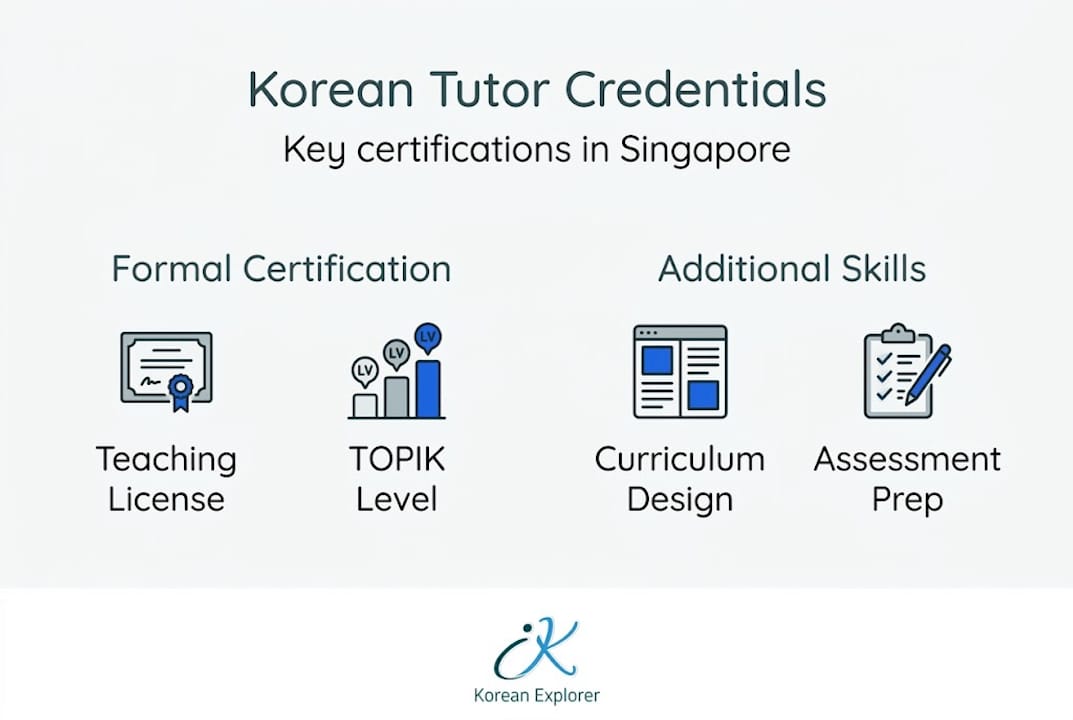
Common certification requirements for Korean tutors in Singapore include formal teaching credentials such as a Teaching Korean as a Foreign Language (TOPIK-aligned) certification, formal language proficiency qualifications, and pedagogical training that covers second-language acquisition principles. Institutions that take quality seriously will also require ongoing professional development from their instructors.
The distinction between a native Korean speaker and a certified Korean teacher is important. Native fluency is a starting point, but teaching a language requires knowledge of how non-native learners process it, where they typically struggle, and how to scaffold explanations effectively in both Korean and English.
Certification standards for Korean tutors within recognized educational institutions typically include the following benchmarks:
| Certification type | Key requirement | Typical issuing body |
|---|---|---|
| Korean language teaching certification | Formal pedagogy training plus language proficiency test | Korean university or recognized language institution |
| TOPIK instructor alignment | Knowledge of TOPIK structure and level benchmarks | National Institute for International Education (NIIED) |
| SkillsFuture-approved instructor | Singapore workforce education compliance | SkillsFuture Singapore |
| Seoul National University curriculum-trained | Course completion in SNU-developed materials | SNU or partner institutions |
To verify that a tutor or school meets these standards, follow these steps:
- Ask for their teaching certification directly. A credentialed tutor will have no hesitation sharing this.
- Check whether the school is SkillsFuture-approved, which indicates compliance with Singapore’s workforce education standards.
- Look for curriculum documentation. Schools using a recognized framework like the Seoul National University curriculum can usually show you the learning sequence.
- Search for student reviews that specifically mention learning progression, not just enjoyment of the class.
- Request a trial lesson. Certified tutors can usually demonstrate structured teaching within a single session, which is obvious compared to unstructured conversation practice.
You can explore Korean classes in Singapore through accredited providers who are transparent about their instructors’ credentials. A well-explained Korean curriculum is itself a sign that the school takes pedagogy seriously.
Pro Tip: Before enrolling anywhere, ask to see the tutor’s certification or the school’s accreditation documents. This is not an unusual request, and any quality institution will provide them willingly.
How certified tutors personalize learning for different goals
Certified tutors do not deliver a one-size-fits-all lesson. That flexibility is one of their clearest advantages over group study guides, apps, or video courses. Depending on your reason for learning Korean, the way a skilled tutor approaches your sessions will look quite different.
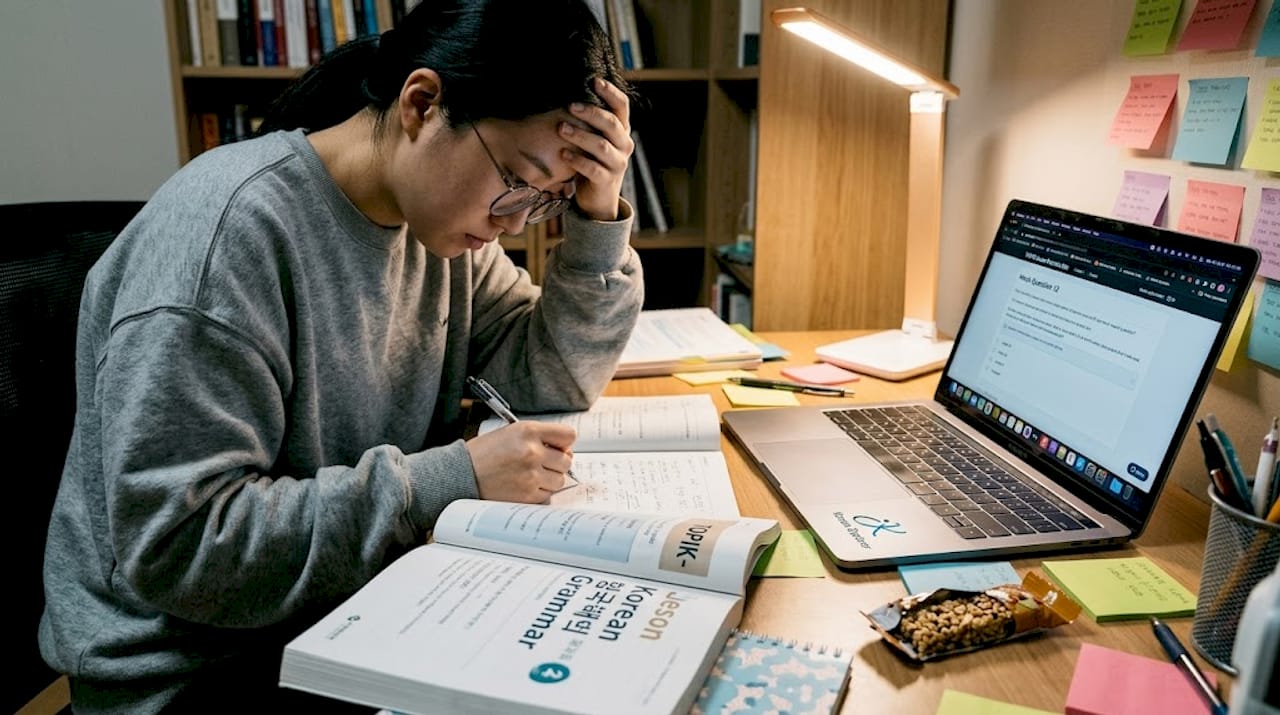
Academic learners, for instance, often need to read and analyze Korean texts, write formal essays, and achieve specific TOPIK scores. A certified tutor working with this group will prioritize grammar accuracy, formal vocabulary, and reading comprehension strategies. They will use practice tests strategically and build in timed writing exercises that mirror actual exam conditions.
Business professionals learning Korean for career purposes have different needs entirely. A marketing manager engaging with Korean partners needs to understand business honorific speech, negotiation language, and industry-specific terminology. A tutor serving this learner will pull from real business scenarios, corporate email formats, and meeting etiquette, not from a general-purpose textbook.
Conversational learners who want to engage with Korean friends, travel comfortably, or consume Korean media need fluency in informal registers, slang, and cultural references. A certified tutor adapts by prioritizing listening response speed, natural phrasing, and the social context behind expressions.
Certified teachers are specifically trained to identify where each learner’s strengths and weaknesses lie and match those findings to targeted instruction. That is a skill that requires both language expertise and pedagogical knowledge.
Specific adaptations certified tutors make for different learner types include:
- Adjusting vocabulary sets to match professional or academic domains
- Modifying speech register instruction based on formal versus casual goals
- Incorporating industry-relevant materials for professionals, such as business contracts or presentation language
- Increasing or decreasing grammar intensity based on whether the learner needs precision or fluency
- Building in cultural context lessons specifically relevant to the learner’s situation, whether that involves workplace interactions, travel, or social relationships
Someone combining language learning with business management studies, for example, benefits enormously from a tutor who understands both the formal language demands and the professional cultural norms of Korean business environments.
Check out this Korean starter kit if you are just starting out and want to understand how certified tutors sequence early-stage learning, from Hangul basics to conversational building blocks.
Pro Tip: At your first session with any tutor, clearly state your specific goal. Not just “I want to learn Korean,” but “I want to pass TOPIK Level 3 in six months” or “I need to conduct business meetings in Korean by year-end.” That specificity allows certified tutors to build a plan that actually serves your timeline.
Measuring success: Outcomes of certified Korean tutoring
Choosing a certified tutor is an investment. Like any investment, you need clear benchmarks to know whether it is working. Vague feelings of improvement are not enough to confirm real progress, especially when fluency requires precision across reading, writing, listening, and speaking.
Certified tutoring programs that integrate structured feedback produce measurable, trackable outcomes. Research confirms that language-specific structured programs with feedback show superior fluency results compared to informal methods, particularly over medium and long-term study periods.
What does success actually look like in practice? There are several clear benchmarks:
TOPIK score progression is the most standardized measure. TOPIK, which stands for Test of Proficiency in Korean, is divided into six levels. Moving from Level 1 to Level 2 within a defined period is a concrete, objective indicator that your instruction is working.
Conversational fluency milestones are equally important but often harder to quantify. Can you initiate and sustain a five-minute conversation without switching to English? Can you understand a native speaker at natural speed without subtitles? These are real markers.
Cultural understanding integration is the often-overlooked dimension. Fluency is not just grammatical accuracy. It includes knowing when to use formal versus informal speech, understanding indirect communication styles, and reading social cues correctly.
Key metrics for measuring progress in certified Korean tutoring include:
- TOPIK practice test scores tracked across multiple sittings
- Tutor-assessed speaking accuracy at scheduled intervals
- Reading comprehension speed and precision on graded texts
- Writing quality evaluated against TOPIK essay rubrics
- Self-reported confidence in real conversations with native speakers
“Fluency is not a feeling. It is a set of measurable skills that certified tutors can evaluate, track, and improve with the right tools and consistent feedback loops.”
Proven techniques for improving Korean skills work best when there is a certified tutor in the picture to identify which techniques apply to your specific gap areas. Without that expert view, learners often practice what they are already good at rather than targeting their actual weaknesses.
The path to fluency achievement is not mysterious. It is structured, measurable, and far more achievable with certified guidance than without it.
What most learners miss: Structured feedback is the real game-changer
Here is something most language learning content will not tell you plainly. Curriculum matters. Motivation matters. But neither of those things will save you if you are not receiving consistent, targeted feedback on your actual output.
Most learners plateau not because they stopped studying, but because they stopped being corrected. They practice the same patterns in the same ways, confident they are making progress, while errors quietly calcify into habits. That is the invisible cost of informal learning.
Certified tutors break that cycle not by teaching more content, but by paying close attention to what you are actually producing and correcting it in real time. A single corrected pronunciation error in week two prevents a year of mispronunciation. A grammar correction on your first formal essay sets the right standard before bad patterns become automatic.
This is why we believe that the most important question you can ask any Korean language program is not “What will I learn?” but “How will my errors be identified and corrected?”
Follow a structured Korean guide that builds feedback checkpoints into every stage of your learning, not just at end-of-term tests.
Pro Tip: Insist on regular, documented tutor evaluations, not just a feeling of “how the lesson went.” Written or verbal feedback tied to specific skills gives you something concrete to act on before your next session.
Next steps: Find your certified Korean tutor in Singapore
With a clear picture of what certified tutors offer and how to evaluate them, the logical move is to connect with a program that meets those standards.
Korean Explorer delivers exactly the kind of structured, feedback-driven instruction this article describes. All classes are taught by certified native Korean instructors who are fluent in both Korean and English, and the curriculum is developed by Seoul National University and aligned with TOPIK standards. Whether you want to explore Korean language courses in a group setting, pursue private Korean classes for one-on-one attention, or use SkillsFuture Korean language credits to offset your fees, Korean Explorer has a flexible option that fits your schedule, budget, and goals. Locations above Tanjong Pagar MRT, Jurong, and Tampines make access convenient from across Singapore.
Frequently asked questions
How can certified Korean tutors help me achieve fluency faster?
Certified tutors use structured programs and consistent corrective feedback, and research confirms that language-specific structured programs produce significantly stronger fluency outcomes than informal learning approaches.
What qualifications should I look for in a certified Korean tutor in Singapore?
Look for formal teaching certification, TOPIK-alignment knowledge, and verifiable credentials from recognized institutions. Certification standards for Korean tutors in Singapore typically include both language proficiency and pedagogical training requirements.
Do certified tutors offer customized learning plans?
Yes. Certified tutors adapt instruction for academic, business, or conversational goals using tailored curriculum and targeted feedback. Private Korean tutoring in particular gives learners a highly individualized path to proficiency.
Are certified tutors necessary for beginners?
Certified tutors are especially valuable for beginners because a solid early foundation, built with structured curriculum and corrective feedback, prevents the bad habits that become very difficult to unlearn later. Structured Korean learning helps beginners reach conversational milestones significantly faster than self-directed study.